You’re currently in Stage 3: Scaling
Based on your answers, you’re currently Scaling — the final phase of building a successful corporate cloud program. During this stage, platform teams spread key cloud practices across the organization and introduce self-service provisioning and automated remediation.

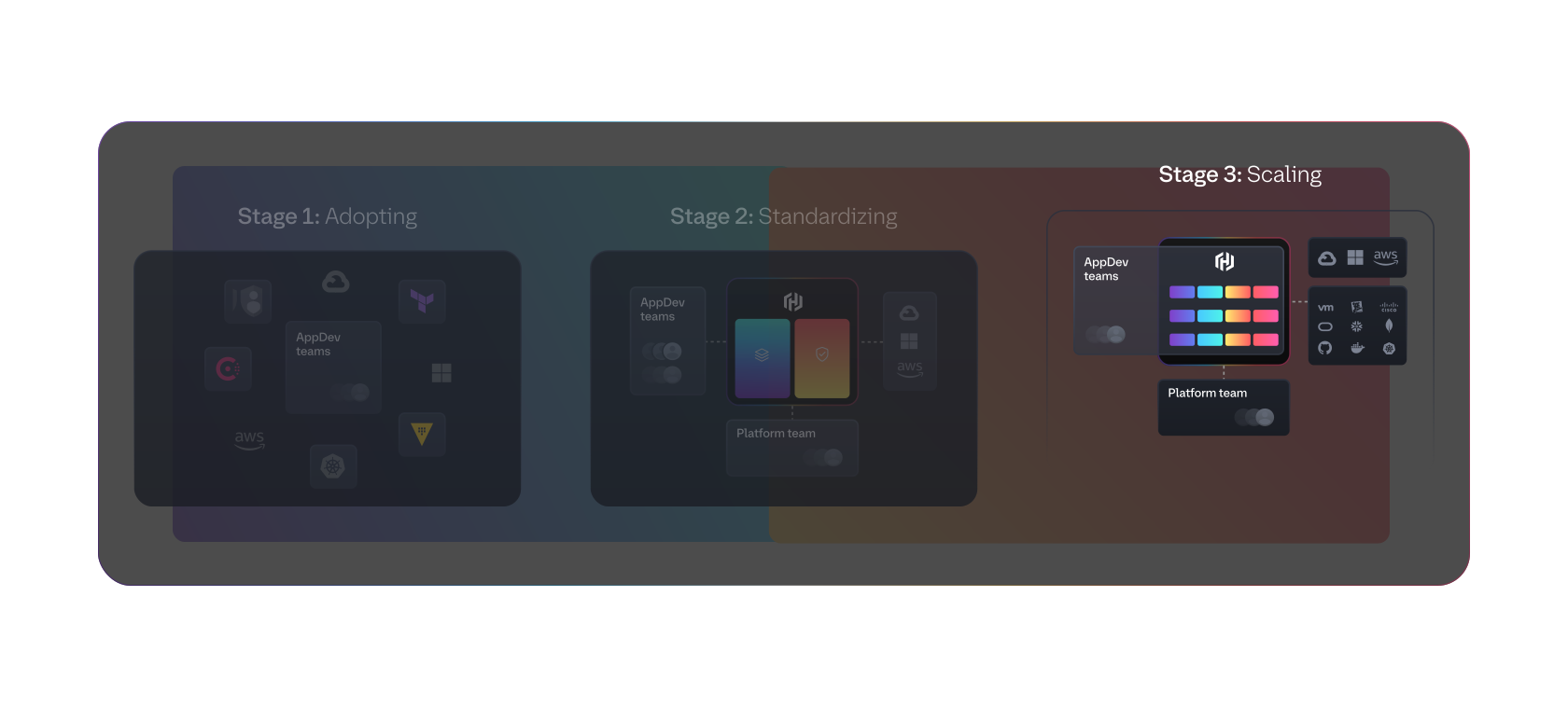
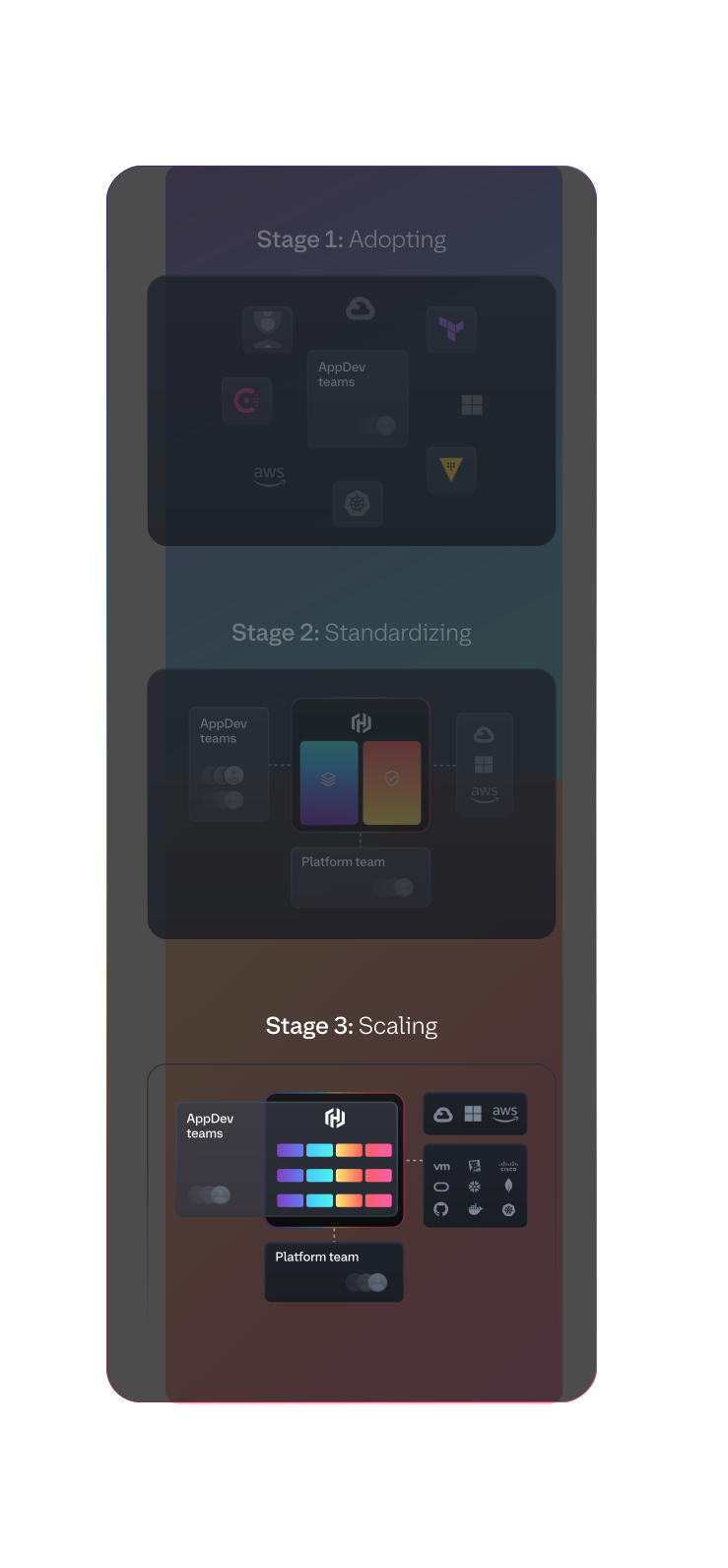
Common practices in this phase
Organizations in the Scaling phase are taking the cloud platform they’ve built and extending its functionality, learnings, and workflows across their entire digital estate. This includes other cloud providers, SaaS applications, and on-premises datacenters. Priorities include:
Infrastructure
Making developer tools self-service
Improving self-service workflows with no-code modules to support teams of all skill levels
Optimizing cloud spend and efficiency
Continuously monitoring infrastructureto detect drift and maintain health
Security
Advancing data protection capabilities, including encryption as a service, transparent encryption, and key management
Scaling their system of record across hybrid environments, including multiple clouds and datacenters
Creating advanced automations for managing security and network configurations
Improving visibility for auditing and optimizing secrets management tools and systems
»Benefits and challenges in this phase
Typical Scaling practices have specific rewards and drawbacks.
- Short term cost reductionAbility to spin up new infrastructure without capital expenditures for new hardwarePlus
- Working in silosIndividual teams tend to create standalone workflows for similar activities, with minimal cross-team collaborationminus
- Lack of policy enforcementDifficulty enforcing cost controls and policies for security and governanceMinus
- Lack of standardizationWithout a common platform, many processes are done manuallyMinus
- Increased security riskMultiple implementations with lack of oversight leading to greater threat exposureMinus
Continuing to mature in the cloud
With a mature cloud program in place, organizations in the Scaling phase can focus on deploying more sophisticated capabilities, optimizing cloud spend, and implementing developer self-service.

Infrastructure Lifecycle Management
Infrastructure Lifecycle Management (ILM) uses infrastructure as code (IaC) to build, deploy, and manage the infrastructure that underpins cloud applications. With a mature IaC platform in place, organizations in the Scaling phase can extend existing workflows even more broadly throughout development teams.
»ILM practices to help you continue maturing
- Enable developer self-serviceMaking developer tooling self-service with an internal developer platform like HashiCorp Waypoint.Learn more
- Create and use no-code modulesEase developer self-service with built-in catalogs like no-code provisioning from HashiCorp Terraform.Learn more
- Use health assessments to detect infrastructure driftContinuously monitor your infrastructure and catch changes when they happen using drift detection.Learn more
- Automate cost optimization toolsPut tools and systems into place that monitor costs and alert the right teams to unexpected changes.Learn more
- Manage the infrastructure lifecycle from end to endAdopt tools and automation to continuously manage the lifecycle of your infrastructure, along with proper end-of-life processes to avoid orphaned, unused deployments.Learn more
- Implement advanced image pipelinesEnsure consistent deployments that allow teams to change a golden image once to update all downstream builds.Learn more

Security Lifecycle Management
Security Lifecycle Management (SLM) uses identity-based access controls to manage the security lifecycle of your secrets, users, and services. From an operations and security standpoint, organizations in the Scaling phase have the tools in place to implement more sophisticated SLM workflows and systems.
»SLM practices to help you continue maturing
- Encrypt data seamlesslyUse advanced data protection capabilities like encryption as a service to protect critical data.Learn more
- Automate service networkingSecurely drive service-to-service access through policies using dynamic service-based networking.Learn more
- Expand to private and hybrid datacentersStandardize your security tools beyond the public cloud across your entire organization.Learn more
- Manage keys and certificatesSecure systems by automating encryption, key management, and PKI for encryption and identity workloads.Learn more
- Shift security leftBuild all security systems and tools directly into the infrastructure platform for consistent protections and risk reduction.Learn more
- Secure resources with multi-hop sessionsProvide access to private resources by connecting into complex network topologies through reverse-proxies that let users securely access locked-down resources as needed.Learn more
»Resources to help you continue maturing
- Optimize cloud spend with HashiCorp TerraformExperts break down how to best optimize cloud spend with HashiCorp Terraform in a four-part series, which covers the causes of cloud waste, how to prevent avoidable cloud waste, and how to address the provisioning skills gap effect on cloud waste.Webinar series